“Nerva helped me rewire my vagus nerve communication. Now my gut talks to my brain in a way that doesn't signal panic. I can cook and eat normally again. I can go to restaurants.”
Recommend clinically studied brain–body programs across gut, pain, menopause, and mental health.
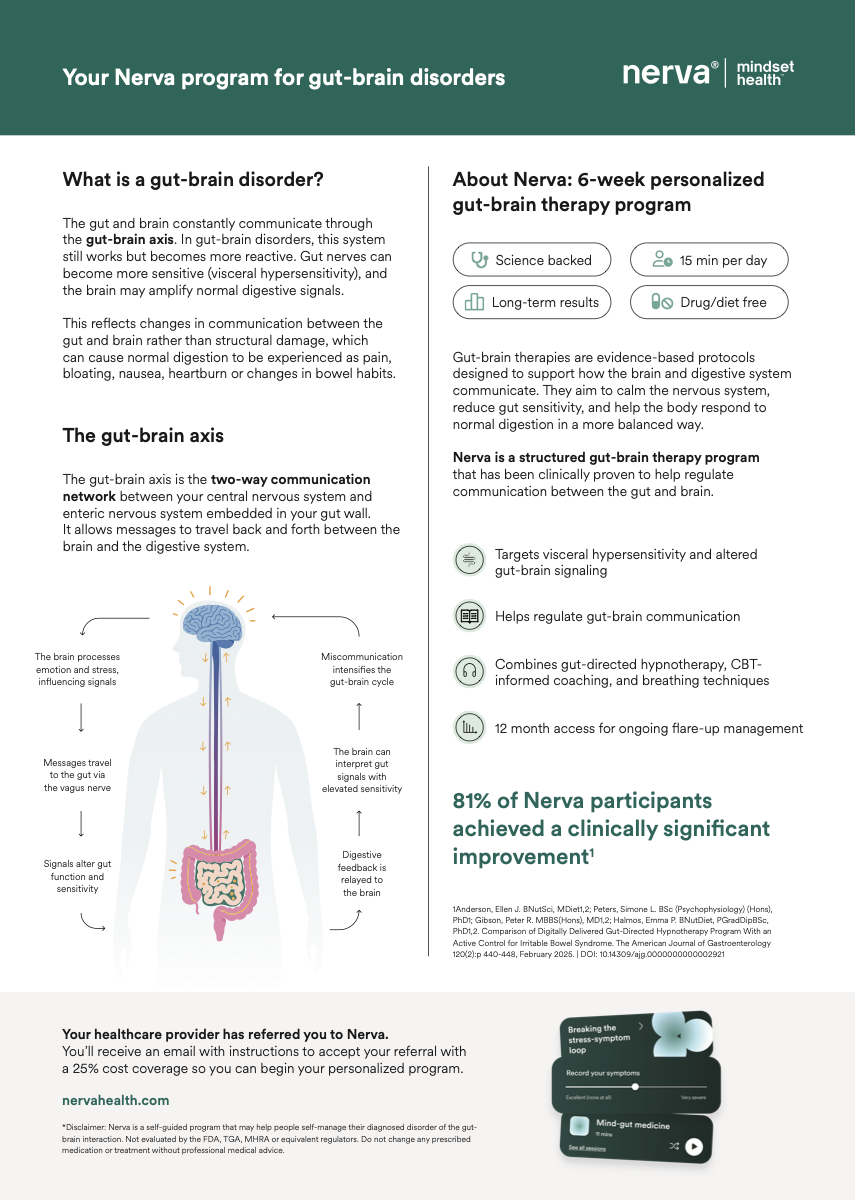
Audio sessions help retrain how the brain interprets signals from the gut, the vasomotor system, and pain pathways.
Patients learn to reinterpret persistent pain signals as safe rather than threatening.
Diaphragmatic breathing, vagal tone work, and brief CBT to down-regulate the stress response.
| Program | Indication | Best fit |
|---|---|---|
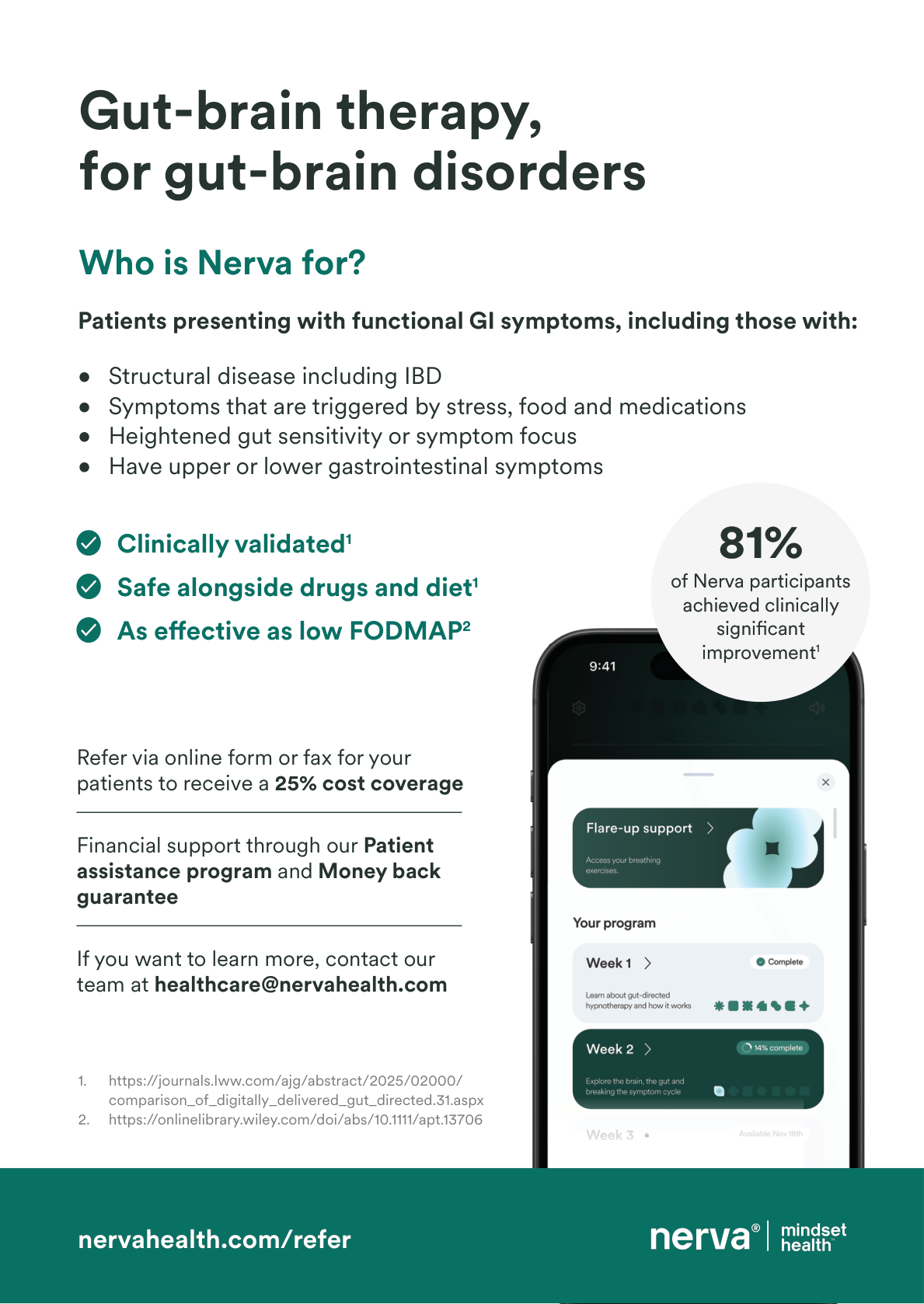
| Nerva | IBS, functional dyspepsia | Adults 14+ with a clinical diagnosis of IBS or another disorder of gut-brain interaction. Works alongside diet (including low FODMAP) and pharmacotherapy. |
| Relio | Chronic primary pain | Adults with chronic primary pain (incl. chronic low-back pain, fibromyalgia) where structural disease has been ruled out or stabilised. Patients open to a brain–body explanation of pain. |
| Evia | Vasomotor symptoms | Peri- and post-menopausal women with bothersome hot flashes or sleep disruption. Particularly suited to breast cancer patients and others who cannot or prefer not to use hormone therapy. |
| Claria | Anxiety, depression, stress | Adults with mild to moderate anxiety, depressive, or stress-related symptoms. Designed to sit alongside primary care or as a stepped-care entry point. |
Programs are designed to sit alongside dietary, pharmacological, or psychological interventions. They can be incorporated into a patient’s care plan at any stage of treatment.
“Nerva helped me rewire my vagus nerve communication. Now my gut talks to my brain in a way that doesn't signal panic. I can cook and eat normally again. I can go to restaurants.”
Secure form, EHR order set, or e-referral.
Patient contacted within 24 hours. Sessions run automatically.
PROM data at week 6, 12, 24. Escalations in real time.
Each program is offered as an annual subscription. Practitioner-referred patients receive 25% off automatically. While our consumer programs are not currently covered by insurance, the cost is comparable to a single specialist session. Patients facing financial hardship may be eligible for assistance through the program's Patient Assistance Program. Health plan and employer coverage is contracted separately, see /health-plans.
10+ published clinical studies across the family, including a randomised controlled trial in the American Journal of Gastroenterology (Anderson 2025) where 81% of Nerva users hit a clinically meaningful improvement in IBS-SSS, and a JMIR Formative Research study (Scheffrahn 2025) where 76% of Evia users reported a 50%+ reduction in daily hot flashes. For comparison, pivotal trials of linaclotide for IBS-C show 34% responder rate (Chey, AJG 2012), and venlafaxine for hot flashes shows 37–61% reduction (Loprinzi, Lancet 2000). See /research for the full list.
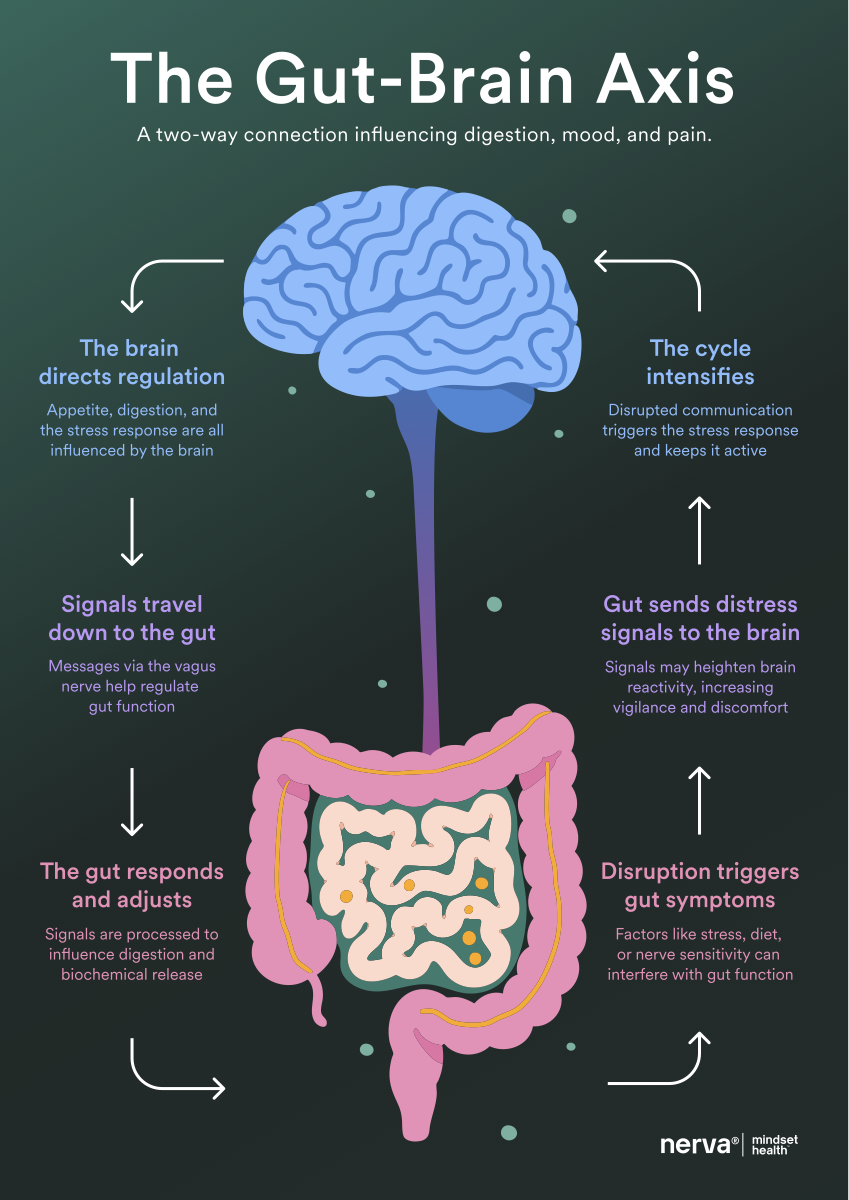
Describe it as helping the brain recalibrate its communication with the body. The brain integrates signals from the gut, the vasomotor system, the pain pathways, or the autonomic nervous system. When that integration goes wrong, patients feel real symptoms even when there is no acute injury or pathology. Clinical hypnotherapy, pain reprocessing, and autonomic regulation help the brain recalibrate those signals. It is evidence-based, time-limited, and works alongside what you are already recommending.
Referrals take under 30 seconds via web form, EHR order set, or e-script. Our team handles onboarding, daily delivery, and patient support. PROMs and symptom trajectory come back to you on a fixed schedule. There is no second login, no new platform to learn, and no additional administrative burden on your practice.
All four programs meet HIPAA and SOC 2 Type II standards. Patient data is encrypted in transit and at rest, segregated by indication, and never shared without consent. BAA available on request. Clinician portal access is available for institutions running pilots.
Our programs are self-guided digital programs that help patients with diagnosed conditions (IBS, chronic primary pain, vasomotor symptoms, anxiety, depression) self-manage their symptoms and improve quality of life. They are not medical treatments or diagnostic devices. Patients should not change prescribed medication or other treatment without speaking to you first.